
Online Cross-Belt PGNAA Elemental Analyzer
Continuous elemental composition, ash, moisture, heating value, and weight — measured in real time across the full material stream on your conveyor belt. No sampling. No lab delays. No process interruption.
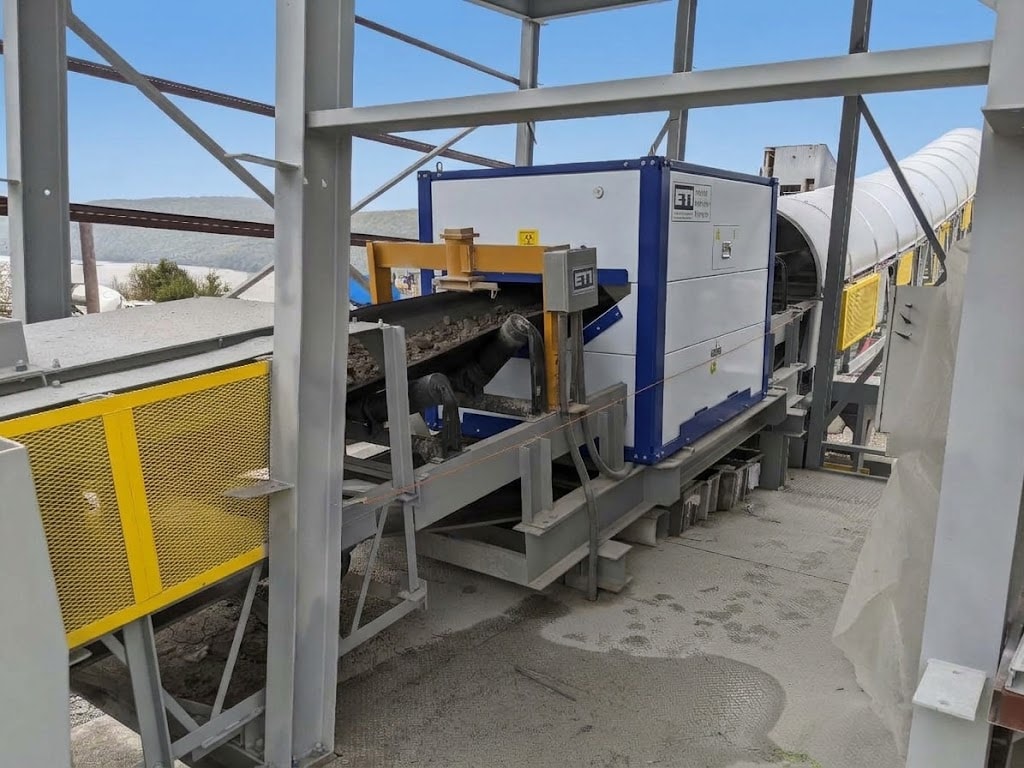
Turn continuous measurements into better process decisions
Control material quality
Use continuous composition data to guide blending and sorting.
Respond without lab delays
See changes as material moves through production.
Measure the full stream
Analyze the full material flow without extracting samples.
Configured for your material

Fuel applications
PGNAA + Ashmeter
Elemental composition, ash, moisture, heating value, and weight.

Non-fuel applications
PGNAA + Nuclear Belt Scale
Elemental composition, cement quality parameters, and material weight.
Applications

Coal & Power Generation
Continuous measurement of ash, moisture, heating value, sulfur, and elemental composition for coal blending, quality control, and emissions compliance at power plants and coal preparation facilities.

Cement
Real-time elemental analysis of limestone, raw meal, and clinker for process control and quality assurance in cement manufacturing. Continuous measurement of calcium, silicon, aluminum, and iron ratios enables tighter control of kiln feed chemistry and finished product consistency.

Minerals & Mining
Ore grade control and process optimization for iron ore, bauxite, copper ore, phosphate rock, and other bulk minerals. Real-time measurement of key elemental ratios — Fe, Al, Si, Ca, P, and more — supports sorting feed characterization, blending decisions, and recovery efficiency without the delays of laboratory sampling.

Biomass & Alternative Fuels
Measurement of heating value, moisture, and elemental composition for biomass co-firing, waste-to-energy, and alternative fuel applications.
Customer Installation
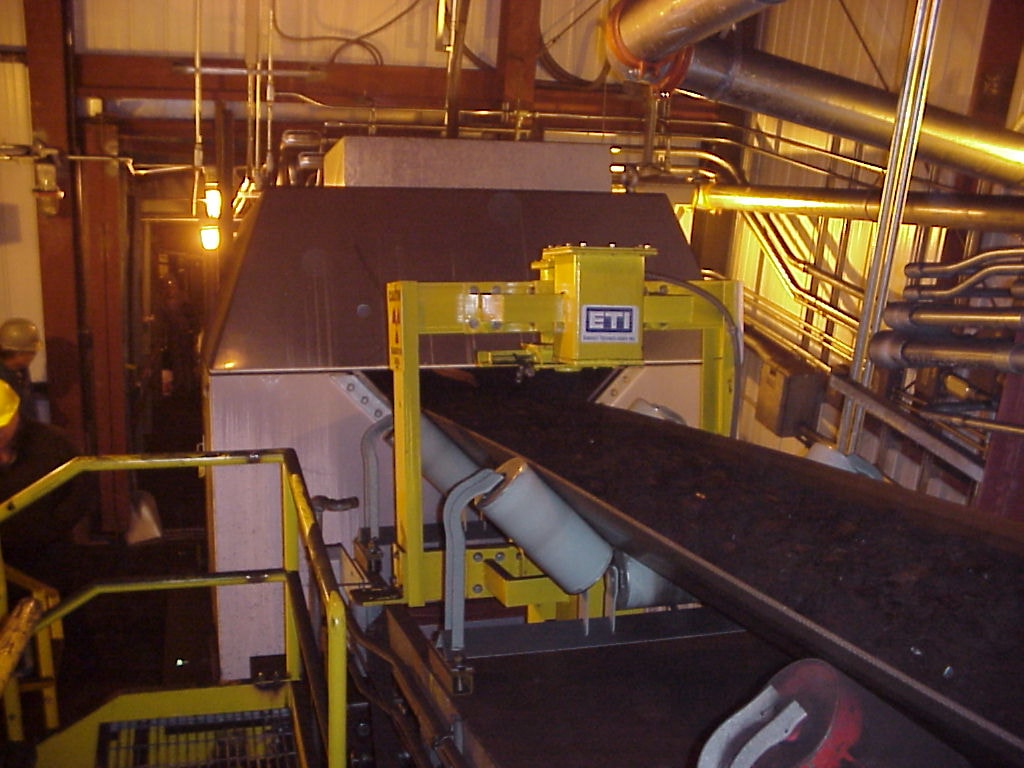
Minnkota Power Cooperative
Four ETI Model 730 FSEAs are installed at Minnkota Power Cooperative's Milton R. Young Station — providing continuous real-time measurement for fuel quality monitoring and combustion optimization, including ash, heating value, sulfur, mercury, and base-to-acid ratio.
View case studiesKey Benefits
- Continuous, real-time measurement — no sampling delays or lab turnaround
- Full-stream analysis for truly representative results
- Simultaneous measurement of elemental composition, ash, moisture, heating value, and weight
- Non-contact, non-destructive measurement — no process interruption
- Patented ETI design combining PGNAA and gamma attenuation in a single system
- Proven in coal, cement, biomass, and other bulk material applications
- Integrates with DCS, SCADA, and plant control systems
- Weight measured at the analyzer — not at a remote mechanical scale.
- No consistent bed depth required — unlike systems that rely on a separate mechanical belt scale at a different conveyor location, the integrated Model 410M nuclear belt scale shares the same measurement point as the PGNAA detector, so the system normalizes for actual belt loading in real time.
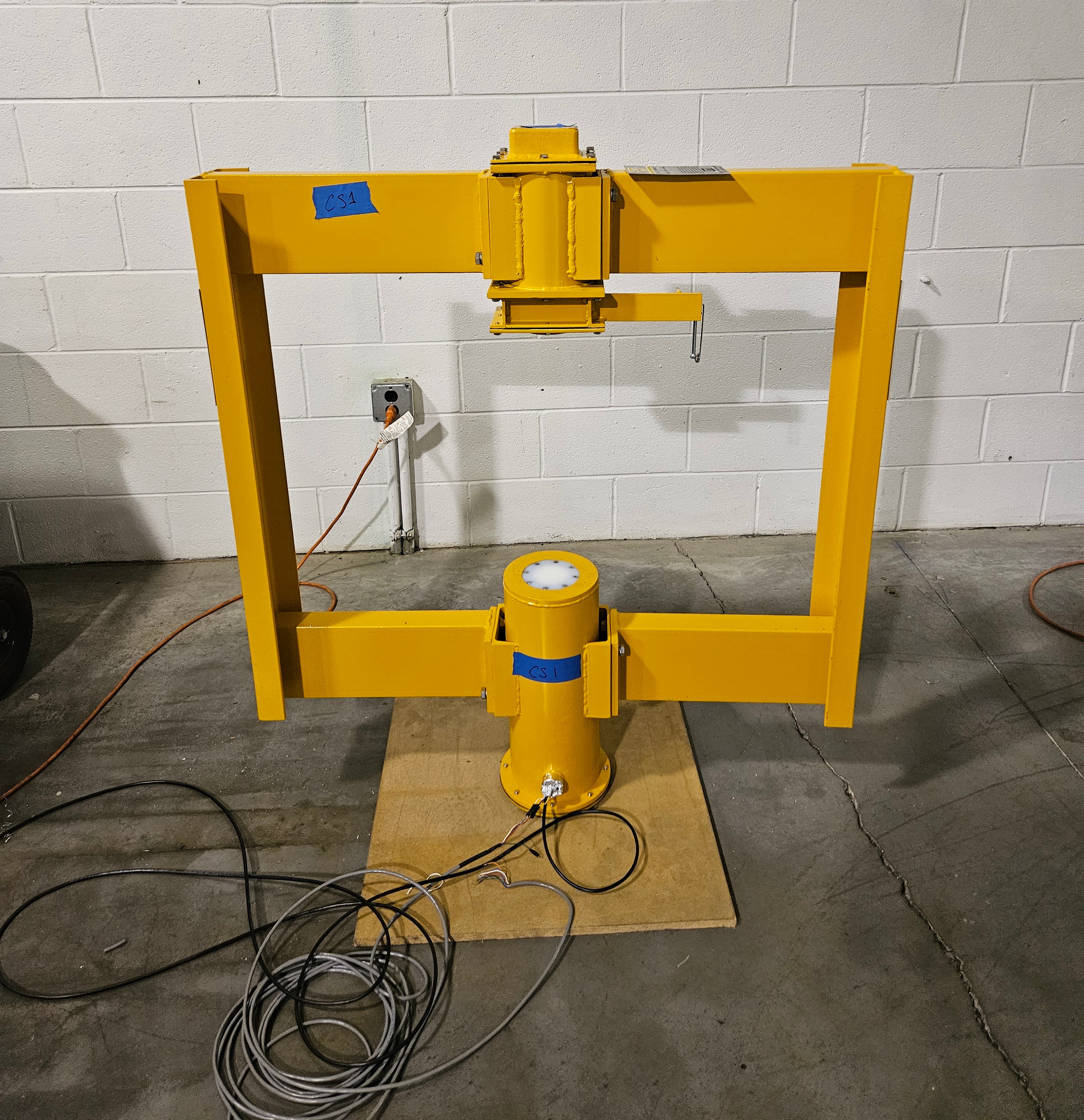
Integrated Nuclear Belt Scale — Weight Measured at the Analyzer
Many PGNAA systems rely on a separate mechanical belt scale installed at a different point on the conveyor. When the weight measurement and the elemental measurement are made at different locations, any material that loads or unloads between those two points introduces error into the elemental calculation. The ETI Model 730 FSEA eliminates that source of error with a patented integrated nuclear belt scale — mounted at the same point as the elemental measurement. Depending on the application, this is either an ETI Model 410(M) Ash Analyzer configured for weight measurement, or an ETI Model 500 Nuclear Belt Scale.
System Components
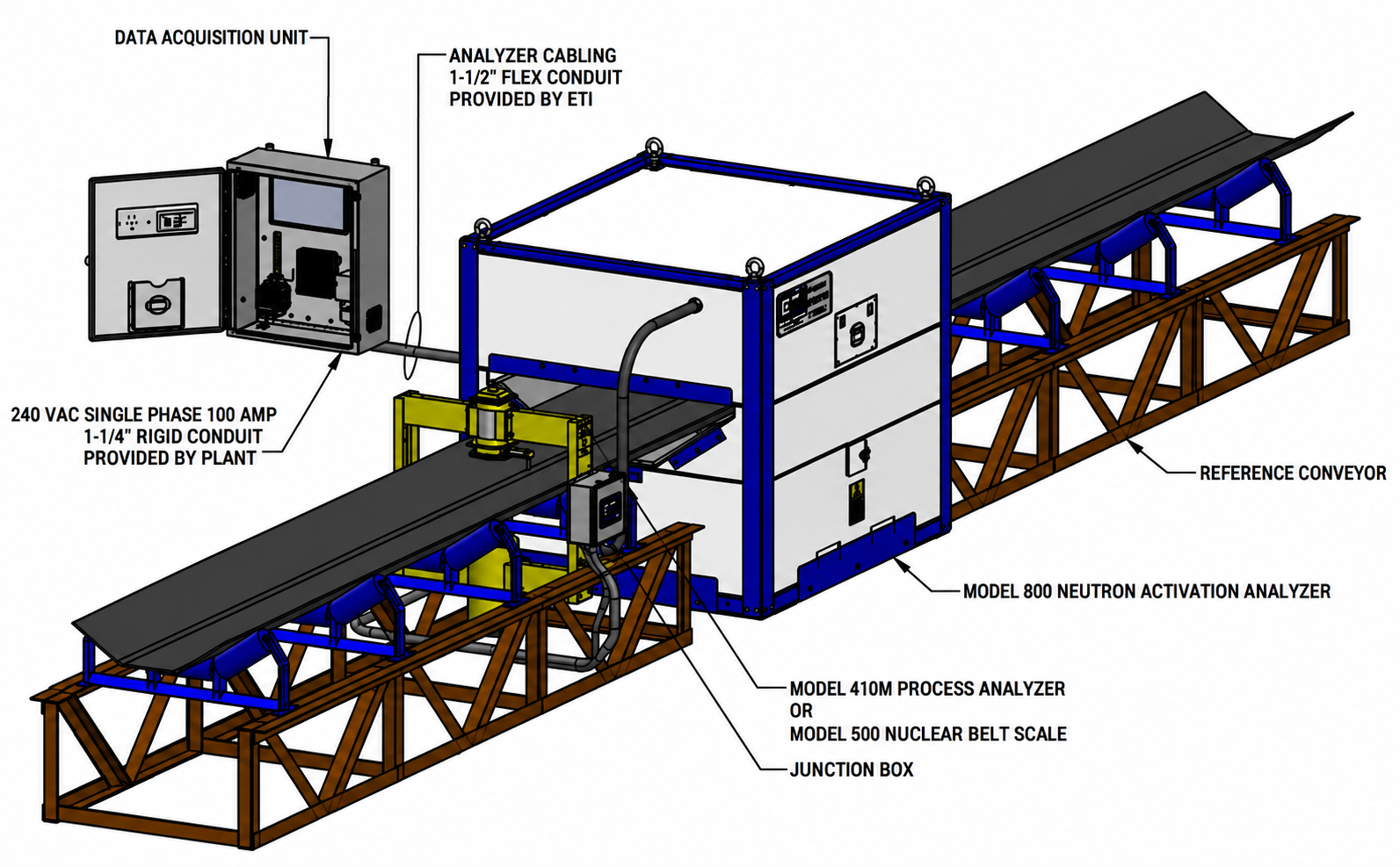
The analyzer consists of:
- Model 800 Neutron Activation Analyzer (NAA) — PGNAA-based elemental measurement of the full material stream. Weight approx. 7,800 lbs. (3,538 kg).
- Model 410M Dual-Gamma Analyzer (DGA) — or — Model 500 Nuclear Belt Scale — Fuel applications: Model 410M measures ash content, moisture, heating value, and weight. Non-fuel applications: Model 500 Nuclear Belt Scale measures material weight. Both integrate with the NAA for correlated elemental analysis.
- Model 900 Data Acquisition Unit (DAU) — NEMA 4 electronics enclosure with fully digitized data acquisition, UPS, I/O modules, and managed network switch. Dimensions: 36 in. H × 30 in. W × 13 in. D (91 × 76 × 33 cm). Weight 170 lbs. (77 kg). Wall-mountable; max cable run 328 ft. (100 m).
- ETI DataView Software — Graphical display of spectral data and measured analytes. View data from 1-minute measurements to daily totals. Configurable tabular and graphical displays with shift reporting and email notifications.
Real-Time, Full-Stream Analysis
Unlike point-sampling methods, the FSEA analyzes the entire material stream as it moves on the conveyor belt — delivering continuous, representative measurements with no sample preparation, no process interruption, and no operator intervention.
From Data to Decision
Continuous elemental data is only valuable when it drives action. The FSEA feeds real-time measurements directly into the decisions that control material quality.
Coal blending
Adjust blend ratios using live ash, sulfur, and heating value readings to hit contract specifications before material leaves the plant.
Cement raw mix
Adjust additive feed rates based on continuous elemental measurements — keeping the raw mix composition on target without waiting for lab results.
Stockpile management
Track accumulated material quality against the target specification as the pile builds, so grade deviations are caught early.
Process control integration
Output feeds directly into plant DCS or SCADA systems, enabling automated control loops or operator-guided adjustments from the control room.
How PGNAA (Prompt Gamma Neutron Activation Analysis) Powers the FSEA
The FSEA uses a multi-step nuclear measurement process to deliver continuous, real-time elemental analysis:
- 1
Neutron Source
Californium-252 (Cf-252) neutron sources irradiate the full material stream on the conveyor belt.
- 2
Neutron Activation
Neutrons interact with atomic nuclei in the material, causing them to emit characteristic prompt gamma rays.
- 3
Gamma Detection
Scintillation detectors capture the gamma-ray spectrum emitted by the activated elements.
- 4
Elemental Analysis
Spectral analysis identifies and quantifies elements such as carbon, hydrogen, oxygen, sulfur, silicon, aluminum, iron, calcium, and more.
- 5
Parallel Measurement
Ashmeter (fuel apps) measures Ash, Heating Value, Moisture and Weight. Nuclear Belt Scale (non-fuel) measures Weight.
- 6
Data Fusion
Patented ETI design combines PGNAA and Ashmeter/Nuclear Belt Scale data for a complete, correlated material analysis.
- 7
Real-Time Display
Results are delivered continuously to the plant control system, DCS, or operator display — no sampling delays.
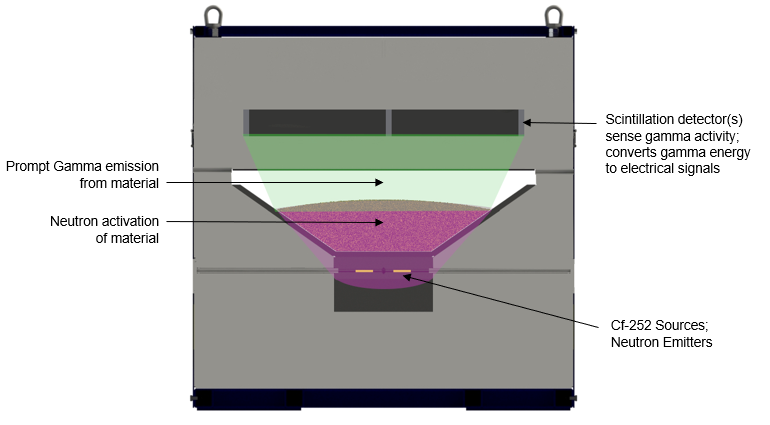
Cross-section of the FSEA showing neutron activation and gamma detection
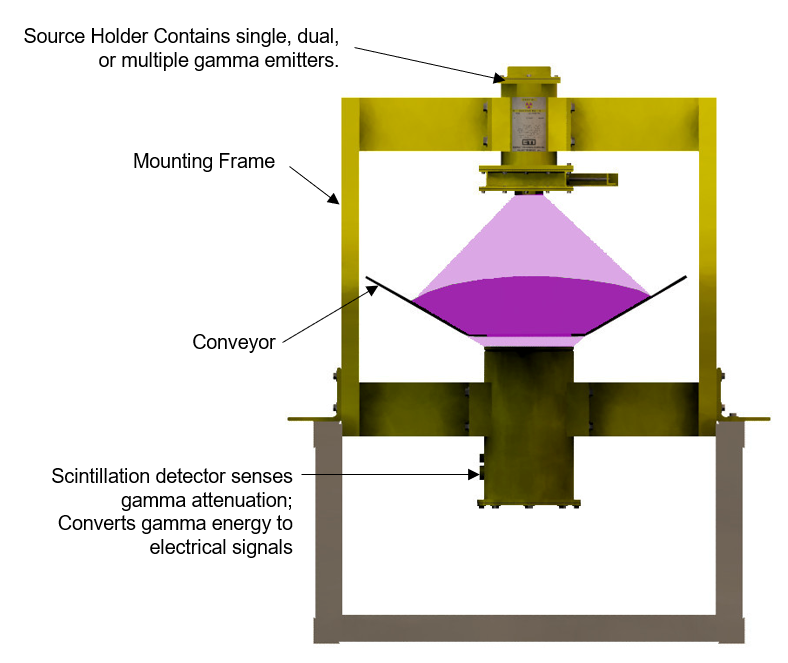
Model 410M Ash Analyzer or Model 500 Nuclear Belt Scale — gamma attenuation measurement through the conveyor stream
Technical Specifications
Measured Parameters (Commonly used parameters shown. Others available.)
- Weight / Density
- BTU / Heating Value
- Ash
- Moisture (H₂O)
- Carbon
- Hydrogen
- Nitrogen
- Sulfur
- Chlorine
- Mercury
- SiO₂
- Al₂O₃
- Fe₂O₃
- CaO
- MgO
- Na₂O
- K₂O
- TiO₂
- SO₃
- MnO₂
- Base-to-Acid Ratio
- C₃S[1]
- C₂S[1]
- C₃A[1]
- C₄AF[1]
- Alumina Ratio[1]
- Silica Ratio[1]
- Loss on Ignition[1]
- Lime Saturation Factor[1]
[1] Cement applications only — derived parameters calculated from elemental oxides.
Radioactive Sources
- Cf-252 (PGNAA)Nominally 58 µg — half-life 2.646 years; replenished at ~30-month intervals by ETI
- Am-241 (DGA)200 mCi
- Cs-137 (DGA)10 mCi
Conveyor Belt Requirements
- Type-A tunnel belt angle35°
- Type-B tunnel belt angle45° (transitional rollers required on each side)
- Conveyor width24–72 in. (600–1800 mm)
The Model 730 FSEA may be adversely affected by conveyor belts consisting of PVC and some configurations of belts containing steel-reinforced material. Belt specifications must be reviewed prior to installation.
Expected Service Life
15–20 years (typical), depending on installation environment
Customer Integration Options
The Model 730 FSEA outputs real-time data via standard industrial protocols, integrating directly with your DCS, SCADA, or plant control system. Continuous measurement data enables automated process control, blending optimization, and quality assurance without manual sampling or lab delays.
Data Outputs
- Analog Outputs4 channels, each configurable for 0–20 mA or 4–20 mA signals
- Digital Outputs4 channels, each configurable for 24 VDC signals
- Modbus TCP/IPStandard industrial communication protocol
- SQL DatabaseDirect database access for Plant Information systems; 1-minute data stored continuously
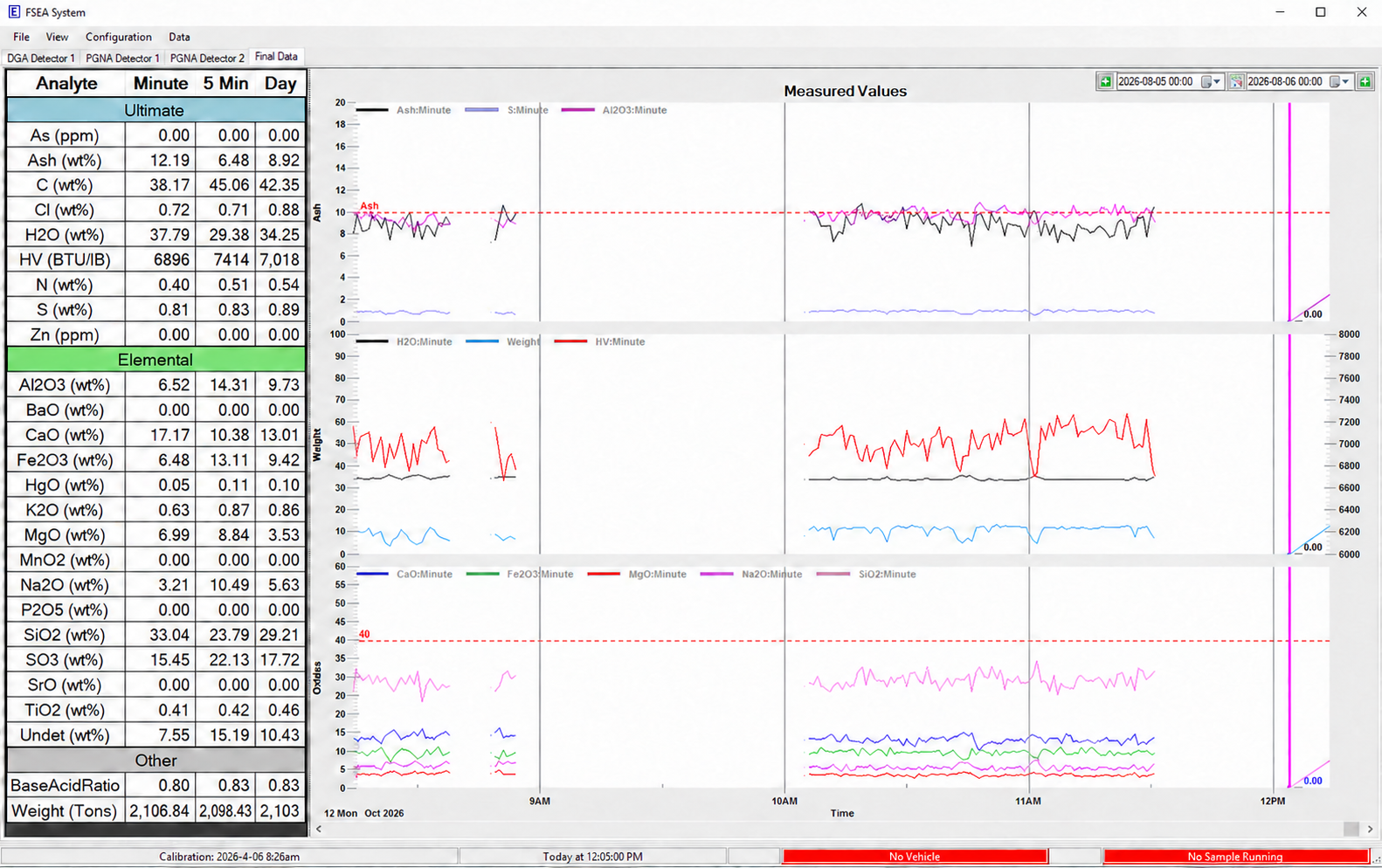
Real-time elemental data displayed in ETI's Dataview software — ash, BTU, sulfur, and full oxide breakdown updated every 60 seconds.
Supplied by Customer
- 115/230 VAC, 50/60 Hz single-phase, 10 A clean power service adjacent to the electronics enclosure
- Conduit and cable trays for power, signal, and fiber optic wiring between analyzer housing and DAU
- High-speed secure network access (Ethernet or fiber optic) for ETI remote support
- Installation of structural equipment and electrical service
- Calibration samples at startup; assistance with laboratory analysis as required
One year of service included
Every ETI system ships with one full year of support — unlimited phone, email, and remote VPN access, plus one scheduled site visit for inspection, calibration, and NRC-required leak tests.
Ready to optimize your process?
Contact our engineers to discuss how this analyzer can improve your operation.